
Dutch food is not like anything you have eaten before. Of that I am sure. Here’s the low down of what to expect when encountering typical Dutch food.
1. Lower Expectations
If you don’t expect much, you won’t be disappointed. Typical Dutch food is not haute cuisine. It is not fine dining. In fact, some might say it’s hardly dining at all. Unless you head to a Michelin star restaurant. However, that doesn’t mean you should steer clear of Dutch menus. Here are five foods you should experience whilst in the Netherlands.
2. Get Frying
A lot of frying is done in the Netherlands. A lot.
‘Snacks’ are a unique type of fast food found floating in fryers across the country, usually served with friets.
Snacks include things like kipcorn, frikandel, bitterbal, bami and kroket.
It is actually best not to ask what is in your snack – you don’t want to know. It’s the reason why snacks are served with more sauce than you know what to do with.
The traditional food at New Year is also a deep fried delicacy oliebollen just as its name suggests (oil balls).
3. Ditch the Cutlery
The Dutch eat quite a bit with their hands. For example, no knives and forks are needed for traditional ‘snacks’ or frietjes, despite the lashings of sauce (see 4). Abandon the metal tools and get stuck in.
4. Get Saucy
The Dutch are masters of sauces. The ‘out of a plastic bottle’ variety. A friend once visited us from England and exclaimed surprise at the sauce assortment in our fridge. I am assimilated and as saucy as any Dutch person you will ever meet.
When we talk about sauces, we are talking about frietssaus (for dolloping on your chips, not to be confused with mayonnaise), currysaus (not the same curry sauce you get in British fish and chip shops), satesaus, chillisaus, knoflooksaus (garlic sauce), shoarmasaus and of course tomato ketchup and mayonaise.
5. Learn to Love it Hot and Strong
Drinking coffee is a national pastime in the Netherlands and for those who like their coffee bordering on coloured water, you are in for a shock. The Dutch tend to like their coffee dark and strong.
Complex coffee machines are a central part of many Dutch kitchens.
6. Drink Milk With Lunch
That the Dutch are obsessed with cows is widely acknowledged so it’s hardly a surprise that milk is popular too. With lunch. And not in schools but in the workplace.
When I first moved to the Netherlands I was astonished to see adults gulping down plastic beakers of milk with their boterham; the last time I’d drunk milk with my lunch was back in the days of bottles of school milk served with a straw!
 On a side note, drinking tea in the Netherlands is also an experience for Brits who put milk in their tea (yes, don’t roll your eyes, I know!). The Dutch often look blankly at you if you ask for some milk to pour into your tea (rightly so, in my humble opinion but my English visitors do put milk in their tea and it has led to some interesting discussions out and about). Consequently, you may end up using creamer or koffiemelk in tea. Either way, it doesn’t make for a ‘nice cup ‘o tea”.
In addition, when the Dutch drink white coffee they tend to use koffiemelk (evaporated milk) or koffiecreamer and not the regular stuff from a cow like many Brits.
7. The Dutch Like it Flat
Like the country they live in, one favourite Dutch food is flat; pancakes.
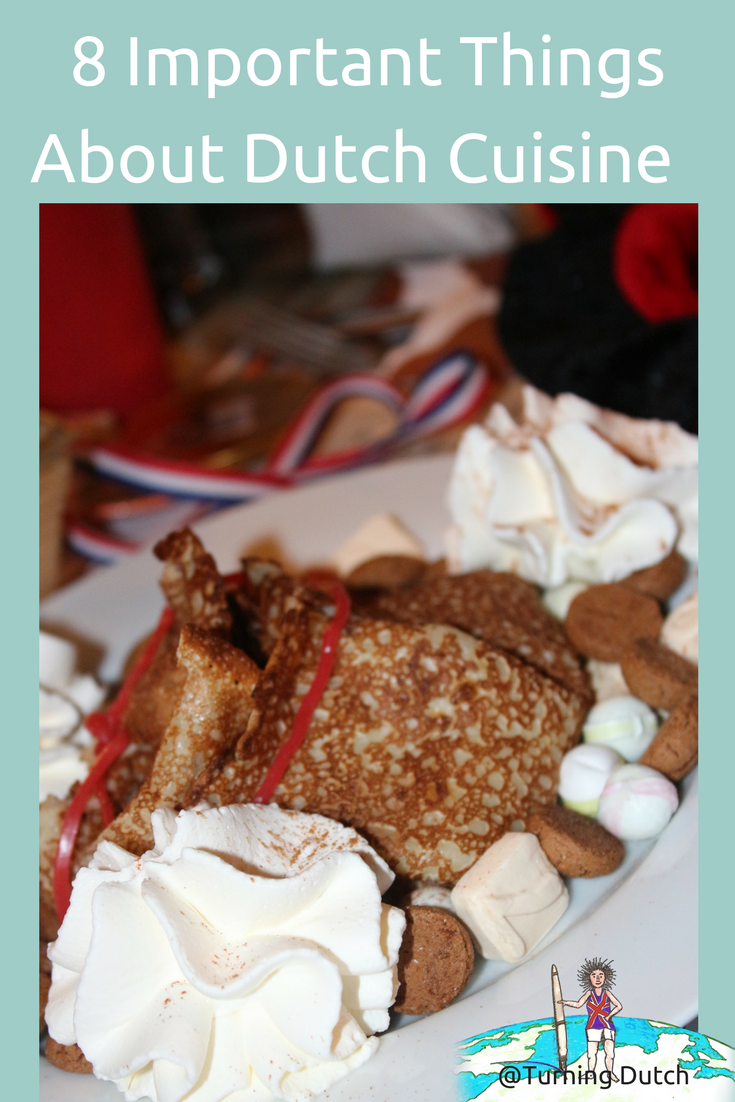
Pannenkoekenhuizen (pancake houses) are everywhere and are wildly popular. You’re never far away from one.
Pancakes come in all sorts of varieties – sweet, savoury and everything in between. They even come in different sizes; poffertjes are mini pancakes. If you want to make your own you can buy poffertje pans, something I did and regretted the first and only time I used it. It’s much easier to buy them or consume them in a pannenkoekenhuis.
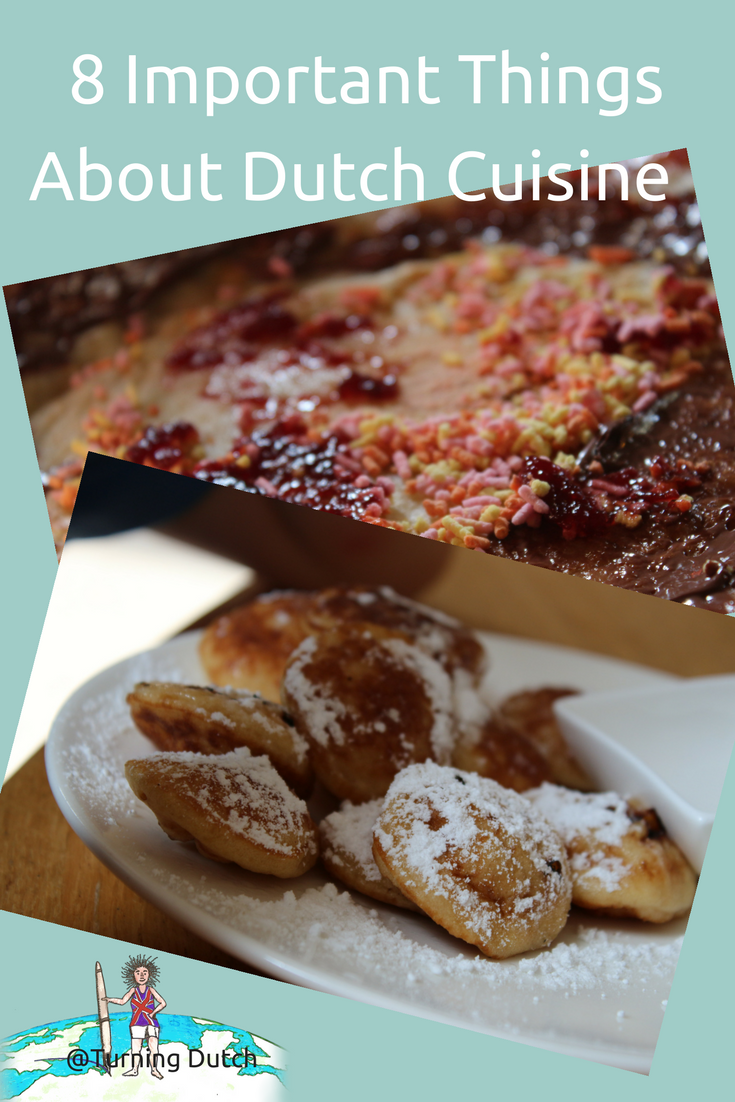 The thing is that dinner in a pancake restaurant quite often results in a meal of pancake covered in sugar and syrup. Not a vegetable in sight. This is what I call pudding or dessert…….. and I am told I am wrong – sweet pancakes are simply a dinner that is a treat.
My tip is to eat dinner before you head out and grab pudding in the pannenkoekenhuis unless you plan to take a savoury pancake, which by the way really are very good.
8. Take up Jogging
Aside from all the deep fried food and the pancakes I have mentioned, there is also a lot of sweet food on the Dutch menu, especially when it comes to celebrating.
For birthdays there is the usual birthday cake (if you are lucky), and you are required to provide a traktatie for your classmates or colleagues. This means you either exercise serious willpower or end up with a ‘treat’ on a regular basis.
To celebrate the birth of a baby the parents offer beschuit met muisjes (meaning literally biscuits with little mice; in reality a round, dry, crunchy cracker with either blue or pink sugar coated anise seeds depending on the gender of the baby).
The Dutch mark King’s Day with orange tompouce.
Sinterklaas celebrations mean sweets, sweets and more sweets. And little biscuits.
On New Year’s Eve oliebollen and appelflappen are all the rage and even a simple coffee date with a neighbour is usually accompanied by some kind of sweet treat.
It all starts to take its toll on the hips. And thighs. And rear end. So taking up jogging is a good idea.
The alternative is to hide away in your house and quit socialising FOREVER.


8 comments