
Bonfire Night is a cultural event that is laden with nostalgia for me. Neither my brother nor I live in Britain anymore, so this is an annual event that we generally miss out on. But the memories are fond.
Bonfire Night Traditions
At this time of year as kids in Britain we would wrap up in woollen scarves, hats and gloves and stand excitedly in the dark waiting for the lighting of the bonfire; for the moment when the flames would spring in to life and the wood would start to crackle, for the moment that we could feel the heat on our cold, red cheeks. The guy perched at the top of the fire would eventually fall and burn, the effort of making the figure disappearing literally in a puff of smoke. The crowd would cheer.
Fireworks and Food
Once the bonfire was in full flame, we would turn our excitement to the fireworks, which would be next on the evening’s agenda. In the meantime we kept ourselves warm by filling our tummies with soup, a jacket potato or a hot dog or hamburger. To finish it off there would be a toffee apple or Bonfire toffee.
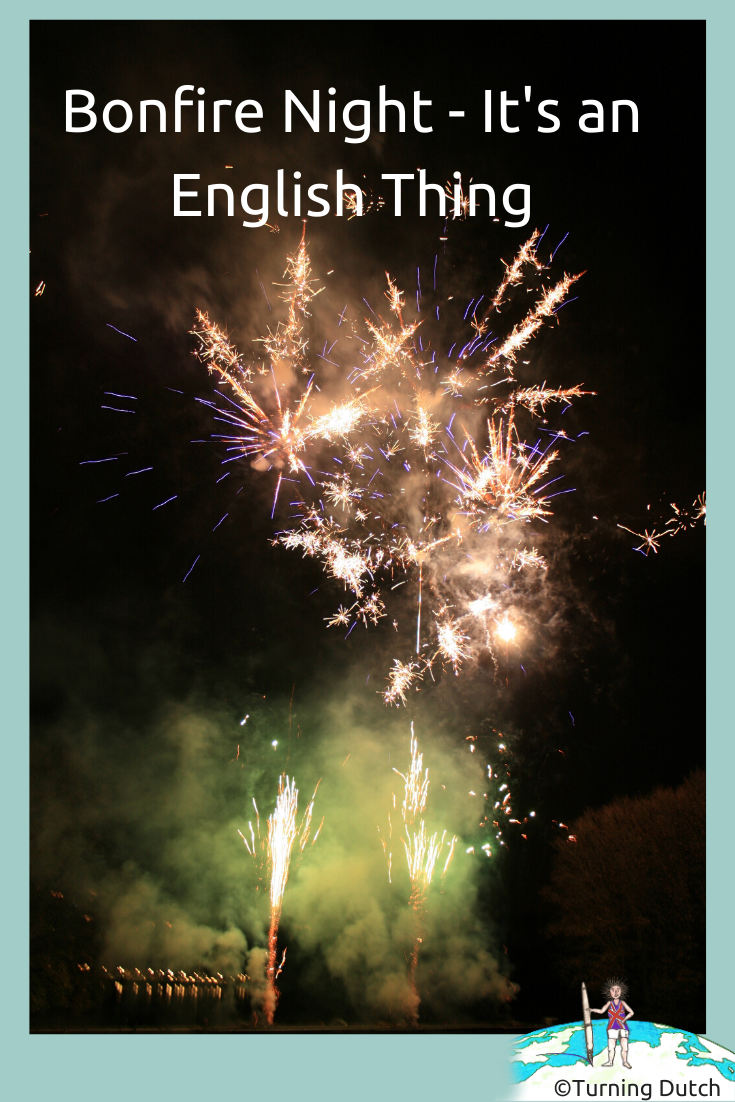
Then the firework display would start and the crowd would “ooh” and “aahhhh” in unison as Catherine Wheels spun, spider fireworks trailed their orange legs across the dark, starry sky and Roman Candles sent shooting stars heaven bound. We would wave our sparklers around, writing our names in light. The bangs, whistles, screeches and crackles echoed across each other as the firework show came to its finale.
Childhood Memories
Bonfire night every 5th November sticks with me, the date holding a feast of childhood memories for me, like a box of treasures I can open every year on this day. Since I moved to the Netherlands in 2000 participating in Bonfire night has become harder and I have only been in England to celebrate 5th November twice since 2000. As my children grow up this is a track record I aim to change so that they can learn and take part in a little piece of English history and culture.
A Truly English Thing
For Bonfire night really is an important, traditional English thing. Some people back home have asked over the years “Don’t they celebrate bonfire night in Holland then?” No they don’t. Of course they don’t – the Dutch, in general, have never heard of this 5 November malarkey. After all, Guy Fawkes made no attempt to blow up the Dutch parliament, he set his sights only on the British government. It means nothing outside of Britain.
The History of Bonfire Night
He in fact had a cunning plan to get rid of the protestant monarch of the time by blowing up Parliament and King James I with it in 1605. The aim was to replace the head of state with a catholic one.
Luckily for King James I the gunpowder plot was discovered (the anti-terrorist unit being on full alert back then too by all accounts) and the plotters were arrested and swiftly executed. End of Guy Fawkes and his friends.
On 5th November 1605, the first ‘thanksgiving’ was celebrated and marked with the ringing of church bells and the lighting of bonfires. Hence, why the British, over 400 years later, still light bonfires on 5th November and put an effigy (the guy; named after Guy Fawkes) on top of the fire. The fireworks represent the foiled gunpowder plot – and it’s all ooh ahingly pretty.
It’s also a good excuse to stand about outside in November and complain about the British weather.


0 comments