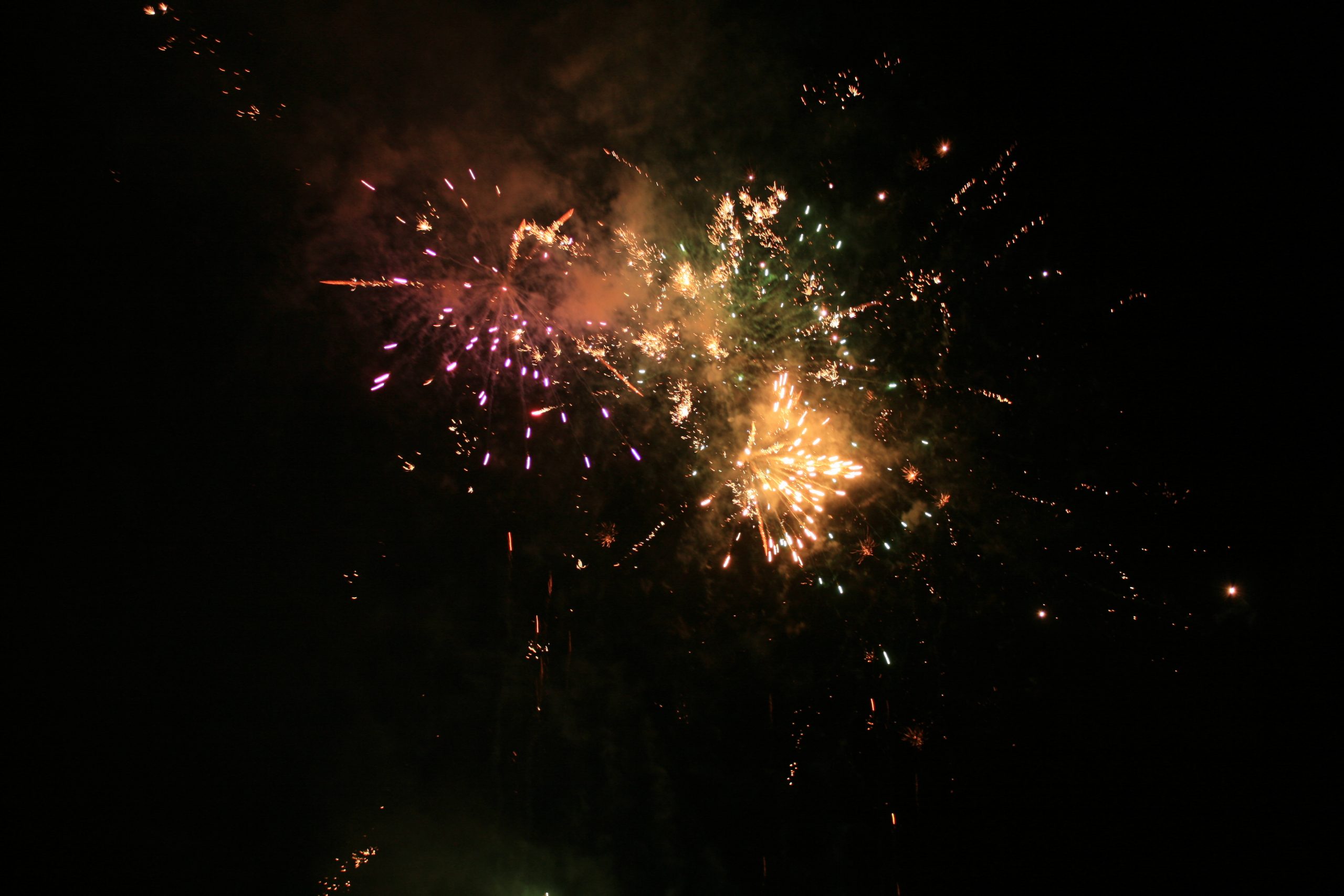
Growing up in England, New Year’s Eve was about seeing the new year in with friends and family. We would spend the evening in a pub somewhere talking and drinking and maybe dancing. It was gezellig. New Year’s Eve in the Netherlands is a whole other experience. For some, it’s about fireworks and destruction.
New’s Year Eve and Fireworks in the Netherlands
Fireworks and the Dutch on New Year’s Eve go together like cheese and pickle, or bacon and eggs. Fireworks are a part of celebrations on the 31st December, as they are in many countries around the world.
What is different though is that New Year’s Eve is the only day of the year that individuals are allowed to set off fireworks themselves. The only day. So many make the most of it.
Millions of euro go up in smoke on New Year’s Eve in the Netherlands alone.

Firework Law on New Year’s Eve
You can set fireworks off on the 31st of December from 6 pm until 2 am on the 1st of January. This used to be from 10am on the 31st of December. So for the entire day, it sounded like a war zone.
Shops may only sell fireworks from the 29th to 31st December. You can buy fireworks from age 12, depending on the category of firework.
Preparation for a Dutch New Year’s Eve
In England, you can post a letter on New Year’s Eve and New Year’s Day if you need to. Here in the Netherlands, you cannot.
Pre-empting the destruction, the postal service blocks up all the postboxes for the days leading up to the new year celebrations. This way no one can post any letters, but the postboxes stay in one piece as no one can ‘post’ fireworks either.
In some high-risk areas, usually in the Randstad, they remove the postboxes altogether.
Parking meters are covered up. Apartment block letterboxes are covered over in plywood and public transport shuts down before the night even gets going.
But that isn’t enough to stop some.
Children and Fireworks
Despite ten years here, the activities on Dutch streets on New Year’s Eve never cease to amaze me.
Children as young as five and six carry rucksacks full of fireworks, letting them off as they walk around their neighbourhood.
Grown men demonstrate to their toddlers how fireworks can blow up a snow mound or a drain.
Children who are still in junior school set fires in the streets, burning anything they can find around them on the paths. When general rubbish runs out, the kids go door to door to ask for paper to burn.
New Year’s Eve Rioting
In some areas, residents feel trapped in their houses as fireworks are thrown at their houses and cars.
Trouble makers set fire to cars.
Bus shelters, shop windows, post boxes and bins are blown up as a matter of course.
Fires burn in streets – anything from Christmas trees to mattresses are thrown on as fuel.
The fire services are busy across the country.
Human Cost of a Dutch New Year’s Eve
And that is to say nothing of the human cost of New Year’s Eve in the Netherlands. Some years there are deaths related to the firework culture around New Year’s Eve in the Netherlands, often as a result of homemade fireworks.
Others spend New Year’s Day in the hospital with loved ones, nursing various injuries.
Police officers are injured as a matter of course in the big cities and in other areas the police seemed to keep a low profile to avoid confrontation, meaning gangs of youths ruled the streets for the night. Other emergency service workers risk being attacked for simply doing their jobs.
Hundred of people are arrested across the country on New Year’s Eve for attacking others (including public service workers such as firemen, ambulance personnel and police), vandalism and other offences.
Reported as a Peaceful New Year
The thing that really amazes me every year is the media quoting high ranking police officers and mayors saying “New Year’s Eve was relatively peaceful”.
Try telling that to the car owners who have nothing but a burnt-out wreck left over, or the family of the police officer with a serious head injury caused by yobs with fireworks, or the families who are busy replacing their windows after vandals went on the rampage.
For some reason, New Year’s Eve is about disorder and destruction to many in big cities across the Netherlands. It is an opportunity to attack, destroy and be violent. Each year it gets no better, despite steps taken by the police. And to call New Year’s Eve ‘relatively peaceful’ seems to me to be accepting the violence and destruction as the norm. Violence and damage aside, I can’t even get my head around young children spending New Year’s Eve letting off fireworks.
Calls for a Firework Ban
So there is widespread destruction. Amounting to millions of euros of damage.
Not to mention the environmental impact.
For animals, it’s incredibly stressful. For many people too.
All of this is the reason why there are louder calls each year to ban fireworks for individual use around New Year. The number of people who believe that being able to set off your own fireworks is as an integral part of a Dutch New Year’s Eve tradition is slowly decreasing.
53% of those polled favour a firework ban. Apeldoorn council plans to put this into effect for 2020/2021 celebrations. There are also calls for central firework displays (London and Rotterdam style).
Others state that instead of penalising everyone, there should be more of a crackdown on those with illegal fireworks and those using fireworks for destruction.
Change is coming, that is for sure.
For Many New Year’s Eve Gaat Wel Over Gezelligheid
Naturally, the majority of the population see the New Year in in a sensible and gezellig manner – with champagne, oliebollen and appelflappen shared with family and friends.
Unfortunately, it is usually these people that spend New Year’s Day cleaning up the streets they live in and sweeping up the damage caused by others. Great way to start the new year right?


Post Comment