
When you live abroad there’s a surprise around many a corner. When you live abroad you stand out. And sometimes that is the backdrop for some amazing experiences. Like the time I was asked by a stranger to do a voice over for a film called Oorlog Boven Gendringen.
A Knock On the Door
One morning on a typical rainy grey January day the door bell rang out loud in the peace and quiet of my home. I opened the door to a stranger, an unfamiliar woman who had what looked like tears in her eyes.
I heard her utter the name of the former owner of our house and my mind started racing, covering all the possible scenarios as to why an acquaintance of the lady that used to live in our house was standing on my doorstep with teary eyes.
She wiped the water away from her eyes, and I realised it was the rain. She started talking.
The Only English Woman in the Village
Roughly translated, this is what she proceeded to explain.
“I heard from my friend that you are English and I was wondering if you would like to help us out. My husband is making a film about the seven allied planes that crashed during the war in this area. We need a native English lady to read some text. Would you be interested?”
1, 2, 3, CUT!
A week later she was back with her husband and his fancy sound equipment and I read some text out. In essence, I read out a letter written by the widow of a British airman whose plane went down over Gendringen.
It took a couple of takes. A particular discussion was about how to pronounce Gendringen. I said it as a Dutch person would say it. The preference was to utter it like an English person would say it. It felt unnatural to pronounce it wrongly without a Dutch G, but after a bit of cringing we got a recording that everyone was happy with.
The Premiere of War Above Gendringen – Oorlog Boven Gendringen
Unfortunately I couldn’t actually be at the premiere showing of the completed film at the Moezeköttel (see below for more info) in Megchelen, which was a real shame. That was a few months back now.
To this day I still have not seen the resulting seven part film, although my eldest has as part of a school trip. The pronunciation of Gendringen was a source of amusement for his class he tells me. (Edit 2022 – I have now seen the film!)
The film is called ‘Oorlog Boven Gendringen’ and tells the stories of the seven planes that crashed around Gendringen. 33 people, including two civilians, lost their lives in these crashes.
Read De Gelderlander article here (in Dutch) about the video series.
The film has been made by Paul Jansen and history enthusiasts Maarten Koudijs and Vincent Weijermars. Importantly, the film is aimed at young viewers aged 10 to 15, in the hope that this group will be the ones to keep these kind of stories alive for future generations.
You can find the film here, and yours truly from around 4 minutes 27 seconds!
Wartime in the Achterhoek
There are wartime information nuggets everywhere you look in the area I live in the Achterhoek. This eastern area was of course one of the first regions to see German troops attacking as early as May 1940.
The Germans ‘borrowed’ our neighbour’s house during the war. There are stories of a German military deserter hiding away in their attic whilst his colleagues lived downstairs.
On the 15th January 1943 the Germans ordered the removal of the clocks from the village church and took them away. These were deemed to be of value for the Germans, along with many other objects that had to be turned in to them. My neighbour tells that German snipers established themselves in the clock tower.
There is a Commonwealth war cemetery in Gendringen.
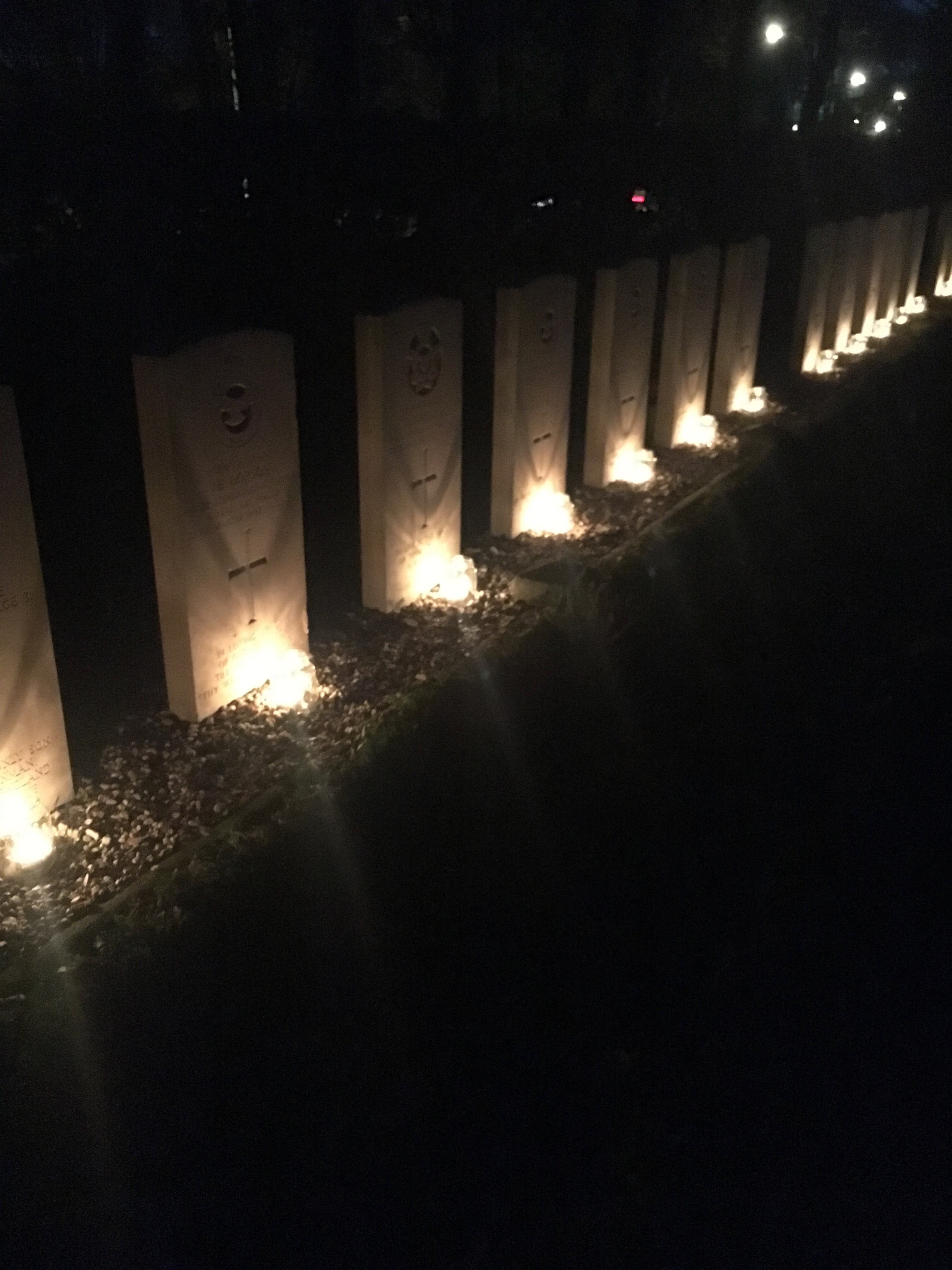
War time in the Netherlands was of course very different from war time in England. My history lessons about WW2 were very different in England to the lessons given in Dutch schools. Because wartime experiences were obviously very different.
I find Dutch war time history fascinating, so the opportunity to be a part of this film is truly an honour.

The Moezeköttel
The Moezeköttel is a characteristic war time emergency house. Houses such as the Moezeköttel were quickly and simply built to house families who found themselves homeless when many houses and buildings were destroyed as the area was liberated in 1945. You can read an extensive history of the house here in English. It’s a fascinating read. If you are in the area, give it a visit.



Post Comment