
The Netherlands is one of the easiest countries in the world to cycle around. Other countries look at the Netherlands with a huge amount of cycle envy. Unlike the British who have made a half-hearted attempt in some places to build cycle paths, the Dutch have given cyclists some proper thought and ensured that getting out and about on a two-wheeler is as easy as…… riding a bike! Here’s the low down on cycling in the Netherlands.

The Dutch Cycle Path Network
The cycle path (fietspad) network in the Netherlands is extensive, stretching from one side of the country to the other in all directions.
Cycle paths are, in general, well maintained, well signposted and serviced by bike traffic lights. For those travelling on bikes on those dark nights there is cycle path lighting. (This is a preferred transport method for many a Dutch person getting home after a good night out – hence why so many end up spending the night sleeping it off in a hedge).
Note that there are fietspaden (separate paths) and fietsstroken (areas on the side of and as part of a road).
Parking Your Bike
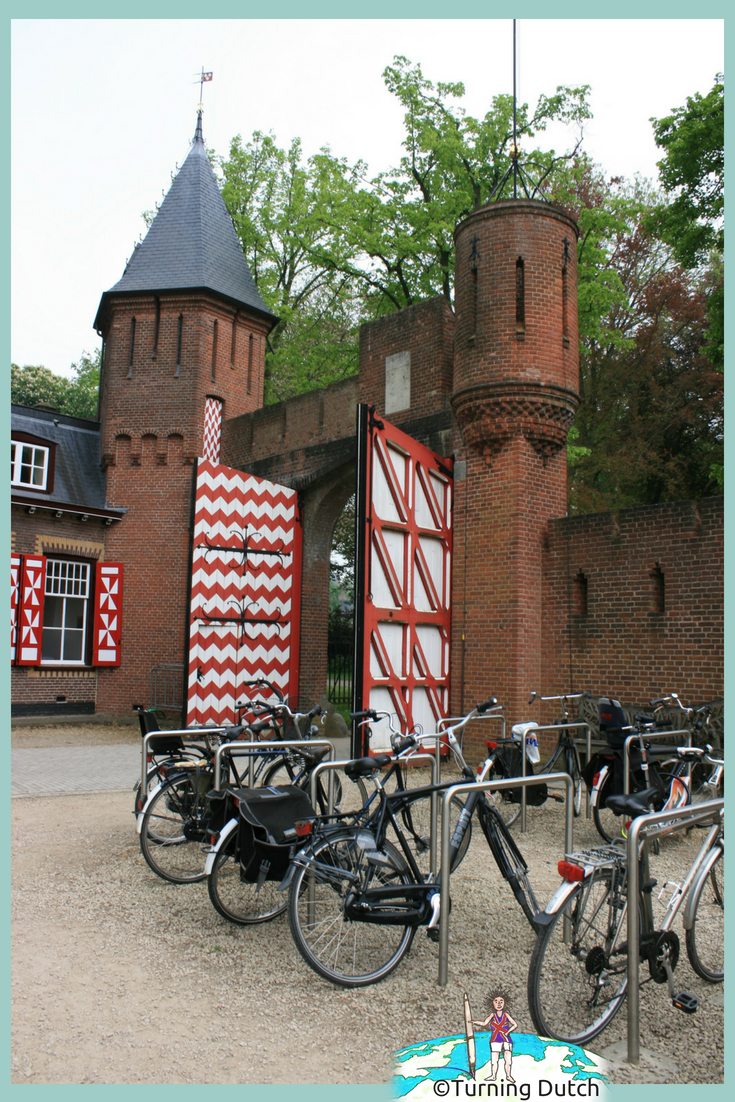
If you have ever been to a city train station you will have noticed the sheer mass of bikes parked there. It’s a typical sight to see foreigners standing open mouthed agog observing bike parking facilities for the first time.

Parking facilities are widely available for bikes; some are paid and manned, but many are free and unmanned. The Dutch are extremely creative when it comes to bike parking facilities – expect racks, covered areas, underground facilities, multiple storey parking stations, vertical racks and lockers.
The fietsbond recommends you park your bike in a bewaakte stalling to prevent theft, which is is a huge problem in a country where there are more bikes than people. Leaving your bike anywhere unlocked requires you to be of an optimistic disposition and emotionally unattached to your bike.
Why the Dutch are Prolific Cyclists
Quite how the Dutch came to be such prolific cyclists is probably because the country is flat and cycling costs nothing; we know how much the Dutch love “gratis”.
And when I say prolific, I mean they ride their bikes on any and every occasion.
Bike Use in the Netherlands
The Dutch ride their bikes to school (from ages that make foreigners heads’ spin), to work (business suit and briefcase and all), to the shops, to get to a play date, to visit family, to pick the kids up from nursery school, to walk the dog (beware – this is not for the faint-hearted and injury is possible) or just to get to a friend’s place.
The Dutch also use bikes purely for recreation – for leisurely Sunday tours or for sightseeing.
Bikes are not Just for Getting People From A to B
Bikes in the Netherlands double up as
- shopping trolleys
- moving vans
- DIY material transporters
- beer carriers,
- mini vans
Everything can be transported on the front, back and side of a two-wheeler.
Two children fit easily on a bike; one in a special baby seat at the front and an older child in their own seat behind the saddle, and for good measure one may also be propped on the bag carrier at the very rear of the bike. None of them wear safety helmets. If you see a child (or adult for that matter) wearing a helmet whilst on a bike, you know they are not Dutch. They are an expat.
Sometimes the bag carrier is used for actually holding bags, usually filled with large amounts of shopping.
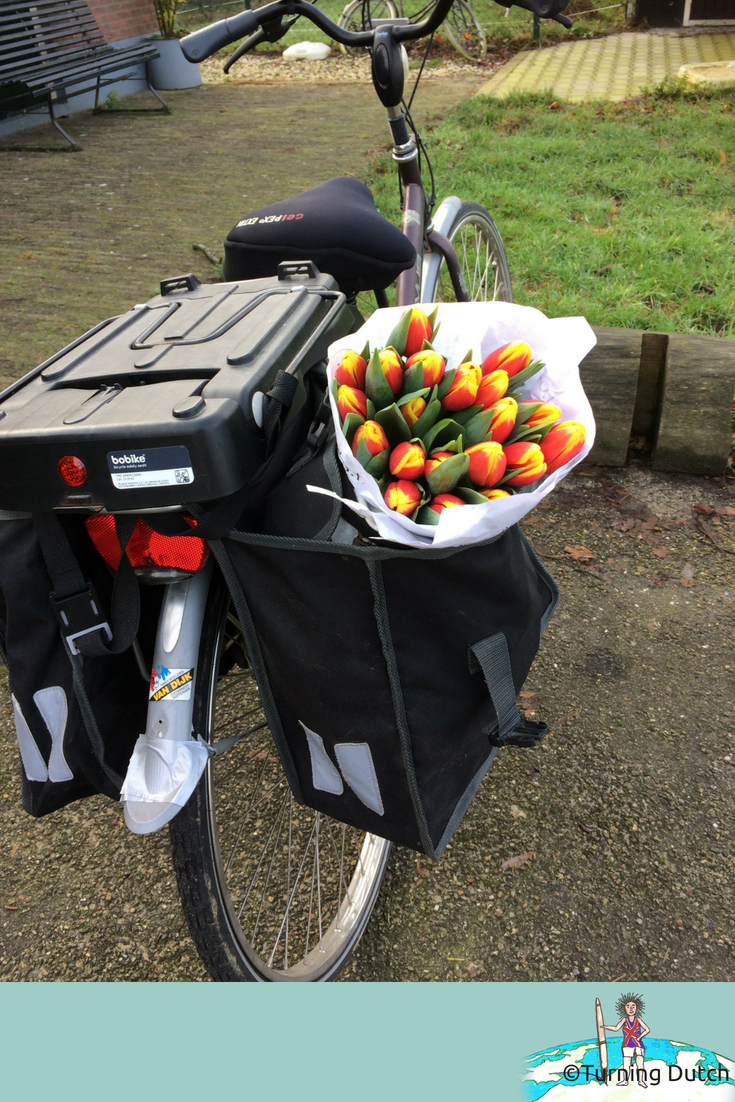
Beer crates are also common items to find on a Dutch bike, along with bunches of flowers and DIY items. Hoards of cyclists leave Praxis or Gamma (both popular DIY stores) with a mountain of wood, paint or tools, throw it all on their bike and cycle off to spruce up their home.
Bikes Are For Everyone
Not only do Dutch bikes carry anything and everything, they carry everyone: women who are 9 months pregnant, pensioners, small kids, suit wearing business men with briefcase, lovers who cycle next to each other hand in hand, school groups on school trips, football teams heading to an away match and teenagers off to school more than 10km away.
Most Dutch children learn to cycle before they can walk and the aged Dutch pedal their way into the next life.
My Cycling Experience
Buying my first ‘Dutch” bike was in itself a lesson in local culture in 2002. I had not ridden a bike for more than a decade so trying the bikes out in front of the bike shop provided plenty of “gratis” entertainment for the bike shop owner. In a very typical Dutch display of bluntness, he made no attempt to hide his amusement at my shaky (and potentially life threatening) pedalling and steering. When my partner explained it had been a long time since my behind had met with a bike saddle, there was an audible gasp.
I still have that same bike. There is a bit of duct tape here and there but in general it is still looking pristine. The reason for this has been the lack of use. Until recently.
Since moving to the Achterhoek I have used my bike more often, out of necessity, because the nearest shops are not within walking distance. This evening I will be cycling with my six year old to his football training. My bike is finally seeing some kilometres.
Expats in the Netherlands and Biking
For many expats here cycling doesn’t come easy. It’s not, as the Dutch say, vanzelfsprekend. Most of us non-Dutchies were not born attached to a bike. Cycling is a skill we have to relearn. And there are lots of unwritten rules to learn.
Let’s be honest, most expats have never experienced busy cycle paths before, which incidentally are shared with scooters and the like. Most have never cycled having to watch out not only for other cyclists, but also for trams, cars, crazy taxis, buses and pedestrians. The experience can be a hair-raising one for the inexperienced cyclist.
But practice makes perfect. So get on yer bike and give it a go.
Useful Cycling in the Netherlands Links
- Plan your own cycle route
- Get confident on a bike at the Bike College and check out the expat program
- Fietsersbond including cycle route planner
- Traffic rules for cyclists (in Dutch)
- Road signs in Dutch and English


10 comments